alternative dance · alternative pop · alternative rock · art pop · british at 119 BPM
On the run
There's a track at mile three that keeps me honest. I was overdressed, the lakefront wind wasn't cooperating, and I'd already convinced myself I was turning back early. Then "I Believe" by Simian Mobile Disco locked in at 128 BPM—the same 128 James Ford and Jas Shaw recorded in London in 2007—and I stopped negotiating. The beat didn't spike. It just held the line, steady and insistent, and my stride fell into it before I'd made any conscious decision to keep going.
That's the condition indie-dance music solved between 2007 and 2017: how do you make electronic music that moves a body without surrendering the grain and friction of a rock band? Simian Mobile Disco figured it out the same year !!! built "Myth Takes" at 125 BPM, neither band aware they were solving the same equation. The choice every artist on The Highway made���from Goldfrapp's 95 BPM Bath crawl in 2003 to Sir Sly's 130 BPM close in 2017—was to treat the dance floor as a terrain to cross rather than a destination to reach. The BPM rises across this playlist not because a curator dialed it up but because that's the physics of momentum deferred: new rave and alternative dance are genres built on the premise that the beat earns its full authority gradually, by accumulation, not by declaration.
The consequence is a highway, not a sprint—14 tracks that climb from Goldfrapp's dark idling engine to Sir Sly's open-throttle close, the body pulled forward by a groove that always feels one gear short of redline. Which is exactly the pacing architecture you need when the goal is sustained output over distance rather than a single explosive commitment. Charlotte Gainsbourg's "Trick Pony" sits at the two-thirds mark, Beck's production all shimmer and restraint, and it's the moment the playlist stops asking whether you're going to finish and starts asking what you're going to do with the momentum you've built. LCD Soundsystem's "Tribulations" follows, James Murphy's cowbell and synth stabs turning the final miles into something that feels less like work and more like inevitability.
I reorganized my records once by the year I bought them, trying to write my own autobiography without picking up a pen. This playlist does the same thing, only the timeline is BPM and the autobiography is about how long it takes to stop thinking and just move.
From the coach
Let the BPM rise. Don't push it early.
Start controlled. Tracks 1–2 idle below 100 BPM. Don't chase tempo. Let your heart rate settle into zone 2, breath easy through the nose. You're building the base of a long curve, not jumping into threshold.
The climb starts at track 3. BPM lifts to 113, then 128 by track 5. This is where you open stride turnover and let the beat pull you forward. Stay below tempo effort—RPE 6 out of 10. The music does the work if you don't force it.
Track 9 is your wall breaker, 66% in. BPM drops to 110. Cognitive fatigue hits here before your legs do. Use the slower tempo as active recovery. Shorten your stride, keep cadence steady, breathe every four steps. Don't drift.
Tracks 11–14 push you home. BPM climbs back to 125, then 128, then 130 at the close. Match the rising tempo with turnover, not effort. Let the groove carry you across the line. No sprint—sustain the pull.
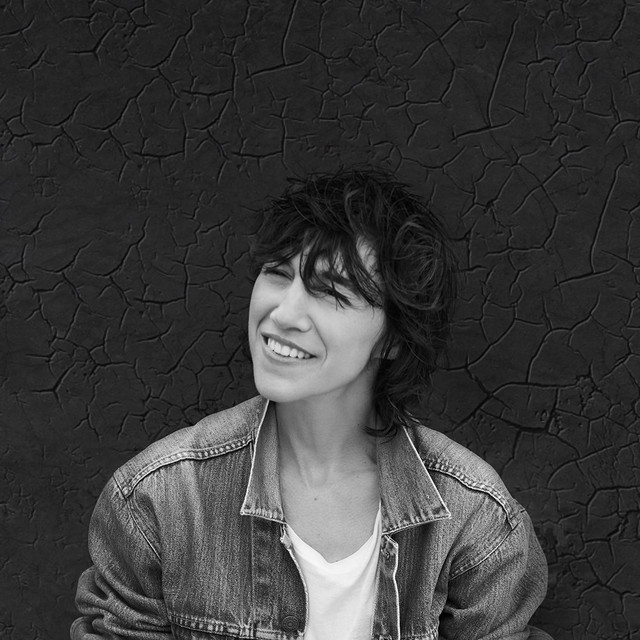
Wall Breaker: Trick Pony
by Charlotte Gainsbourg
Beck produced "Trick Pony" for Charlotte Gainsbourg's 2009 album IRM, recorded after she recovered from a near-fatal brain hemorrhage, and you can hear the restraint in every layer—synth pads that shimmer without overwhelming, a bassline that suggests propulsion rather than demands it. At the two-thirds point in The Highway, this track arrives exactly when the runner has spent miles building momentum and needs permission to trust it rather than force it. The production is all negative space and texture, Beck's signature studio craft turned inward, and it transforms the run from effort into glide. It's the hinge: everything before this was accumulation, everything after is release. The BPM hasn't changed dramatically, but the relationship to it has. You're no longer chasing the beat—you're riding it.
FAQ
- How do I pace a run to The Highway?
- Start easy with Bath, 2003, 95 BPM—Goldfrapp sets a low idle. Let The 2016-2017 Indie Pop Climb build your cadence naturally through Coast Modern and Lewis Del Mar. Hit your rhythm in the Dance-Punk, 2007 stretch with !!! and The Raveonettes. The center is 128 BPM, London & Paris—Simian Mobile Disco and Guetta holding steady. Beck, 2009, IRM Sessions is your two-thirds hinge with Charlotte Gainsbourg. Close strong through The 130 BPM Close. Don't force the early miles—the BPM rises for you.
- What kind of run is this playlist built for?
- This is a 47-minute sustained effort—perfect for a 10K or an easy-paced 8-miler. The BPM climbs from 95 to 130 gradually, so it rewards patience over early aggression. Not a tempo workout, not a recovery jog—it's the run where you're trying to find a groove and hold it for distance. Works best when you're stealing a weekday morning or clearing your head after work. The Highway doesn't ask for speed; it asks for forward motion.
- What's the actual BPM progression and how does it match my cadence?
- The playlist averages around 119 BPM but climbs steadily. Goldfrapp starts at 95, which is below most running cadences—it's about patience, not sync. By the time you hit Simian Mobile Disco's 'I Believe' at 128, your stride has naturally accelerated to match. Sir Sly closes at 130. The beauty is the progression: you're not fighting a static tempo or sudden jumps. The music rises with your effort, so by mile six you're not working harder—you're just keeping pace.
- When does The Highway peak emotionally?
- Charlotte Gainsbourg's 'Trick Pony' at the two-thirds mark. Beck produced it after her brain surgery, and the restraint in every layer—synth pads that shimmer, bassline that suggests rather than demands—transforms the run from effort into glide. Everything before this is accumulation; everything after is release. LCD Soundsystem's 'Tribulations' follows with James Murphy's cowbell and synth stabs, and suddenly the final miles feel less like work and more like inevitability. That's the peak: when you stop chasing and start riding.
- Why does indie-dance work for running when it's not the fastest genre?
- Because indie-dance solved the problem of how to make electronic music move a body without losing the grain and friction of a rock band. Simian Mobile Disco, !!!, LCD Soundsystem—they all built beats that earn authority gradually, by accumulation, not by declaration. The tempo feels like it's always one gear short of redline, which is exactly what you need for sustained output. It's not about explosive speed; it's about a groove that doesn't quit. Running to this, you're crossing terrain, not sprinting to a finish.
- Why does The Highway include artists like Coast Modern twice and span 14 years?
- Coast Modern appears twice because 'Hollow Life' and 'The Way It Was' bookend the climb—2017 indie-pop that understands momentum. The 14-year span from Goldfrapp's 2003 'Train' to Sir Sly's 2017 '&Run' isn't random; it traces the evolution of indie-dance and alternative pop learning the same lesson: the beat builds, it doesn't explode. New rave, electroclash, synth-pop—they all converged on this idea between 2003 and 2017. The Highway is that convergence turned into 47 minutes.