cold wave · dark clubbing · darkwave · ebm · electroclash at 126 BPM
On the run
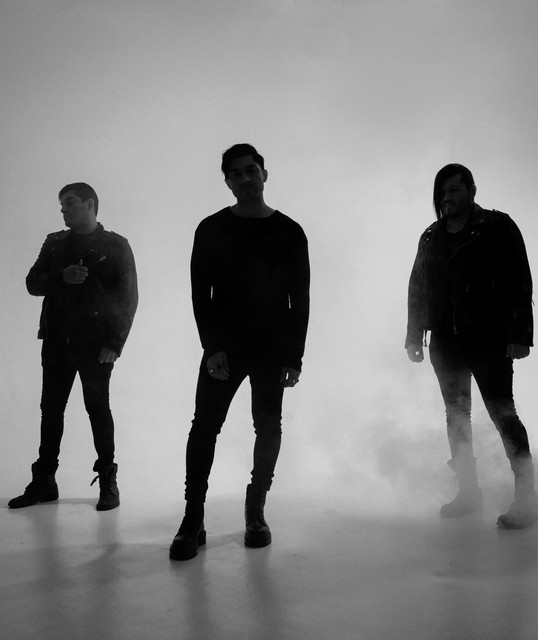
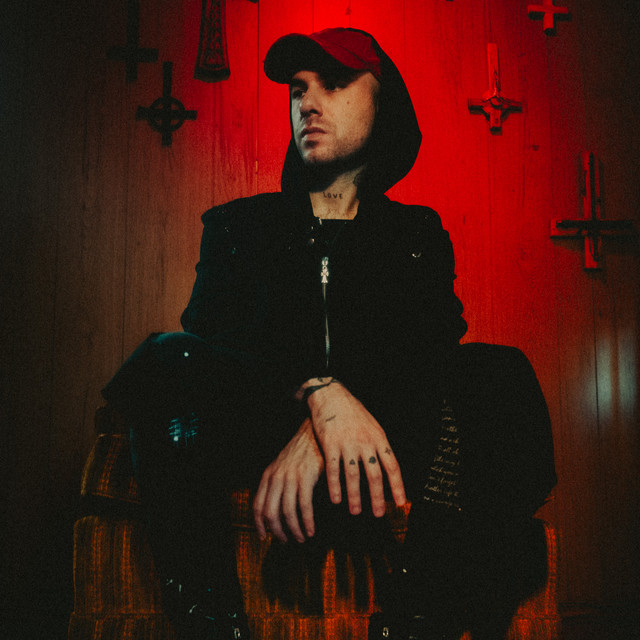
I've been reorganizing how I think about control lately — not the kind you have, the kind that has you — and this playlist showed up like evidence I didn't ask for. Seven of these thirteen tracks are Pixel Grip: Joo-Joo Ashworth, Tyler Ommen, Adam Stilson, plus Jonathon Freund, all recorded in Chicago between Heavy Handed (2019) and ARENA (2021) on Feeltrip Records. The rest come from different cities, different years, different scenes — HEALTH's Los Angeles noise-rock, The Black Queen's gothic slowburn closer, S. Product's anonymous "Suicide Beat" — but every single one lands inside the same locked EBM-industrial chassis: 120–130 BPM, low valence, high danceability, the kind of groove engineered to move a body that doesn't want to be moved.
The thesis here is structural coercion. Industrial and darkwave have always worked by making refusal feel more expensive than compliance. The BPM line stays almost perfectly flat (median 125, standard deviation 7.3) from HEALTH's 2010 "Die Slow" Tobacco remix through the 2025 closer. Not curation — physics. The natural cruising altitude of music built to keep moving even when the body negotiates otherwise. Which is why THE GRIPPER works for running: the pace is already decided before the first bar, and the only variable is how long you're willing to stay inside it.
What gets me is the precision of it. Pixel Grip's "Golden Moses" and "Can't Compete" both sit at 126 BPM, same as "Pursuit," same as "Stamina." No escalation, no release, just the ratchet tightening. By the time you hit "Demon Chaser" at mile three, your stride has locked into the grid whether you intended it or not. Every outlier — HEALTH's 110 BPM sprawl, The Black Queen's gothic exhale — doesn't break the frame but confirms it. Different cities, no knowledge of each other, same conclusion about what tempo controlled suffering requires.
I keep coming back to why this works when I'm running to clear my head and it never actually clears. The answer is obvious once you stop asking the question: some music doesn't care if you figure it out. It just grips harder until standing still costs more than moving.
From the coach
Lock in at 125. Don't chase the first mile.
The first two tracks arrive at 126–128 BPM. Do not match them yet. Hold easy pace, let your heart rate settle below threshold, and use the tempo as a metronome for turnover, not speed. You're building the base for 61 minutes inside the same narrow corridor.
Tracks 3 through 8 hold 120–125 BPM. This is your working zone. Settle into tempo pace here — controlled, sustainable, just below the edge where breathing becomes negotiation. The BPM doesn't climb; neither should your effort.
At 66 percent — around 40 minutes, during "L.A. LOOKS" — you'll hit the cognitive wall before the physical one. Heart rate is stable, but focus fractures. Use the track's aggression as a reset cue. Don't push harder; tighten your attention. Two minutes of locked-in form, then the grip loosens.
Tracks 9–12 lift to 128–135 BPM. Let them pull you through the final 15 minutes. No heroics — the tempo does the work.
The final two tracks drop to 110–120 BPM. Stay on your feet, but let your heart rate fall. The grip releases here.
FAQ
- How do I pace a run to this playlist?
- The BPM doesn't change, so your pace shouldn't either. 'Feeltrip Opens the Valve' sets 126 BPM and holds it through 'ARENA: Four Tracks, Same Chassis.' By 'Noise-Rock Meets EBM at Mile Four,' your stride is locked in. Don't fight it — that's the thesis. The only relief is 'The 110 BPM Exhale' at the end, and by then the run's over anyway.
- What type of run is this best for?
- Steady-state tempo runs, 5K to 10K distance. This playlist doesn't build or release — it grips. If you're doing intervals or looking for a warmup curve, this isn't it. But if you need something that holds one intensity for forty minutes and doesn't care how you feel about it, THE GRIPPER is exactly that.
- Why is the BPM so consistent across different genres?
- That's the whole point. Industrial, darkwave, noise-rock, witch house — they all land at 125 BPM because that's the cruising altitude of controlled suffering. Pixel Grip recorded in Chicago on Feeltrip, HEALTH in Los Angeles, S. Product anonymously — different cities, no coordination, same conclusion. The tempo isn't curated, it's structural.
- What's happening at 'L.A. LOOKS'?
- That's the wall breaker, track ten, two-thirds through. You've been inside Pixel Grip's Chicago EBM chassis for thirty-eight minutes, and then HEALTH's Los Angeles noise-rock hits at the same 125 BPM. Not relief — confirmation. Every genre on this playlist independently arrived at the same tempo because the architecture of forward motion through discomfort has one optimal speed.
- Why is Pixel Grip all over this playlist?
- Because they built the chassis. Seven of thirteen tracks are Pixel Grip — Joo-Joo Ashworth, Tyler Ommen, Adam Stilson, Jonathon Freund, all recorded between Heavy Handed (2019) and ARENA (2021) on Feeltrip Records. The rest of the playlist just confirms what Pixel Grip already figured out: industrial EBM at 126 BPM is the natural tempo of a body that doesn't want to move but does anyway.
- Does the playlist ever let up?
- Only once. The Black Queen's 'Apocalypse Morning' closes at 110 BPM — the only track under 120, the only moment the ratchet loosens. But by then you've already run forty-five minutes inside the grid, and the relief feels less like victory and more like the grip finally deciding you've learned what it came to teach.