alternative dance · ambient pop · baroque pop · britannique · british at 123 BPM
On the run
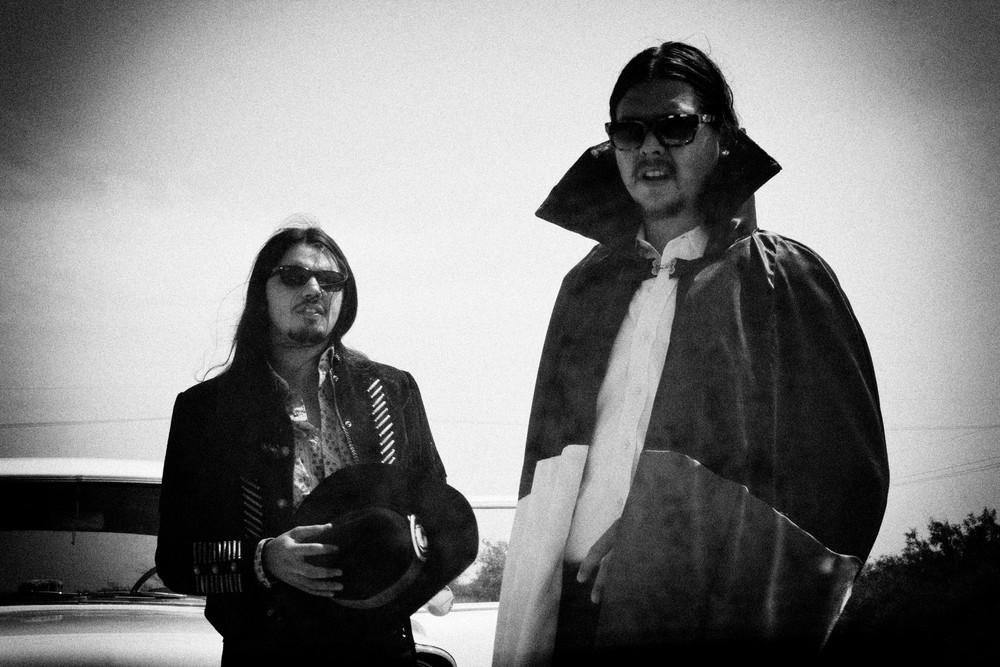
I saw Ghostland Observatory at the Empty Bottle in 2006, before anyone outside of Austin knew who they were. Two guys, one wearing a cape and platform boots, one hidden behind a wall of synthesizers, making dance music that sounded like space rock recorded in a bunker. The room was half-empty. By 2010, when they released "Codename: Rondo" and dropped "Silver City" and "Sad Sad City," they were playing Lollapalooza. Same compressed electronic texture, same mid-tempo chassis, same refusal to escalate. That year—2010—everything sounded like that.
SAN ANTONIO runs at the exact pace required to cover the distance. It doesn't sprint to prove something. The playlist's architecture is a flat BPM arc that holds at around 120-123 BPM because escalation was never the point. Sleigh Bells in Brooklyn, TOBACCO in Pittsburgh, Ghostland Observatory in Austin, The Naked and Famous in Auckland, Ra Ra Riot in Syracuse—none of them shared a producer, none of them shared a label, but every single one of them made the same structural choice in 2010: compress electronic texture and guitar distortion into a mid-tempo groove where the song's energy comes not from velocity but from density, the weight of what's packed inside a locked rhythm rather than how fast it moves.
Pittsburgh's Black Moth Super Rainbow and TOBACCO form the spine here. Two acts who spent 2008-2011 building hazy, overloaded sound worlds in a post-industrial city the music industry had no structural reason to notice. "Hawker Boat" and "Fresh Hex" solve the same problem every track here solves—how to make music that feels enormous without the budget to make it loud. TOBACCO's records on Anticon sound like they were recorded through a broken radio, but the grooves are airtight. That's the condition: noise pop and space rock converging without a center, no shared infrastructure, just a brief unrepeatable moment when everyone independently figured out that weight matters more than speed.
The Kills open with "Future Starts Slow," Phantogram locks into "Don't Move," Blood Red Shoes compresses garage rock into "It's Getting Boring By The Sea"—every track here understands that the hardest part of running isn't starting. It's maintaining the exact pace that doesn't feel like you're trying. SAN ANTONIO captures the vibe of moving through a city that doesn't ask you to explain yourself, at a tempo that doesn't demand proof you belong there.
From the coach
Sustained medium weight, flat arc
This is not a tempo run. This is a density run. The BPM stays flat—median 120—so your effort stays controlled. Let heart rate settle through the first two tracks. Don't chase the beat. The energy here comes from texture, not velocity.
Tracks 4–6 hold steady around 120. This is your working pace. Breathe in rhythm with the groove's weight, not its tempo. When the BPM lifts to 132 at track 7, don't surge—hold your turnover, let the music do the work. That spike is brief.
Track 10 drops you back to 115. Recover here. Cognitive fatigue hits around 66% of any sustained effort—"Rill Rill" arrives exactly there. Use the drop as a mental reset. Acknowledge the fatigue, don't fight it, and lock back into your breath pattern.
Tracks 13–15 climb to 137. This is the final push. Your legs have the capacity; your attention may not. Anchor to the density of the sound, not the clock. Track 16 brings you down to 100. Walk it out if you need to.
FAQ
- How do I pace a run to SAN ANTONIO?
- Start with The Kills and Ghostland Observatory—they set the sustained mid-tempo you'll hold the entire run. The TOBACCO spine (tracks 3-4) locks you into the groove. Don't speed up through the Auckland/Brooklyn debuts section—Sleigh Bells and The Naked and Famous want you to dig into density, not velocity. End with Black Moth Super Rainbow at exactly the pace you've been running. No escalation, just weight.
- What kind of run is this playlist built for?
- This is a steady 10K or 50-minute tempo run where you're not chasing a PR, just covering distance at a locked groove. The flat BPM arc (around 120-123) means it's terrible for intervals and perfect for runs where you want to maintain one consistent effort without thinking about it. It's the playlist for moving through the world at your own pace.
- Why does this playlist stay at the same tempo the whole time?
- Because escalation was never the architecture. Every track here—Sleigh Bells, TOBACCO, Ghostland Observatory, The Joy Formidable—was built on the same principle: energy comes from density, not speed. The playlist mirrors 2010's brief moment when noise pop and space rock converged at a mid-tempo chassis. You're not speeding up because the music never needed to.
- What makes 'Rill Rill' the Wall Breaker track?
- It hits at the two-thirds mark when you stop negotiating with the run and just move. Sleigh Bells sampled Funkadelic, compressed it with distorted guitar, and made something enormous without making it fast. It's the moment the thesis clicks—you don't need velocity to feel powerful, you need weight. The song proves you've been running at exactly the right pace the entire time.
- Why is TOBACCO the spine of this playlist?
- Because TOBACCO spent 2008-2011 in Pittsburgh making hazy, overloaded records on Anticon that sound massive despite having no budget to make them loud. 'Hawker Boat' and 'Fresh Hex' solve the same problem every track here solves—how to pack weight into a mid-tempo groove. He's the backbone because he figured out the architecture before anyone else did.
- What makes 2010 different for running music?
- 2010 was the year when Sleigh Bells, TOBACCO, Ghostland Observatory, The Naked and Famous, and Ra Ra Riot all independently made the same structural choice—compress electronic texture and distortion into a mid-tempo chassis where energy comes from density, not speed. No shared producer, no common scene, just a brief unrepeatable moment when noise pop and space rock converged without a center.