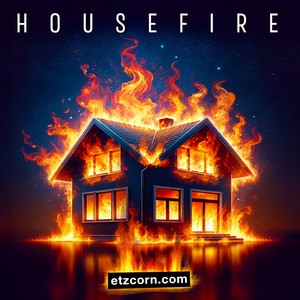
australian · bass house · dance · disco · drum and bass at 130 BPM
On the run
The condition is house music's 2022–2023 post-pandemic pressure cooker, and HOUSEFIRE is what happens when every producer makes the same structural bet without coordination. Fisher reworking Bob Marley's "Jamming" into a 125 BPM tech-house engine, Chris Lake releasing two tracks from Aberdeen in the same window, Fred again.. and RSCL arriving from opposite corners of the UK — no shared scene, no city appearing twice — yet they all locked the groove at 125–128 BPM and let the heat build from friction rather than acceleration.
The BPM spikes to 175 only once, on Campbell's "Would You," and then falls back, like a flame that was never going to sustain that temperature. The choice was thermal, not kinetic. House has always known that the body burns longer at a controlled simmer than at a sprint, and the falling BPM arc from 170 down to 120 is the playlist stating that physics as policy.
I've been running to this for three weeks now, and what keeps bringing me back isn't the ignition — it's what happens after. Twenty minutes in, you're still very much on fire, but it's sustained combustion, not explosion. J. Worra's "Check Out" opens at 128 BPM on Insomniac Records, then Fisher's Marley rework hits and you realize the entire playlist is built on that same structural foundation: lock the tempo, let the friction do the work.
The playlist clusters into discrete thermal zones. Chris Lake's two Aberdeen tracks ("In The Yuma" and "More Baby") arrive back-to-back at the two-thirds mark, both hovering at 126 BPM, both refusing to spike. PNAU's "Solid Gold" and Eden Prince's "Memories" share the same stutter-house production architecture — chopped vocals, locked kick drums, zero interest in acceleration. By the time Fred again..'s "adore u" lands at track twelve, the BPM has cooled to 120, and the playlist is stating its thesis cleanly: you don't need speed to stay burning.
What I keep coming back to is the gap between what I thought this playlist would do and what it actually does. I thought HOUSEFIRE would be about ignition — about the moment you catch flame and sprint. But it's not. It's about the sustained burn, the one that doesn't announce itself but is still, twenty minutes in, keeping you moving. The playlist knows something about endurance that I'm still figuring out: the body burns longer when you don't blow your wad in the first mile.
From the coach
Simmer first. Let the spike find you.
Start easy. Tracks 1 through 4 hold 125–128 BPM—controlled, repetitive, no acceleration. Let your heart rate settle into the groove. Don't chase the beat yet. This is the simmer, not the boil.
Track 5 hits 150 BPM. You'll feel the shift. Hold your tempo. The playlist spikes to 175 BPM at track 6—twenty-four minutes in, right at the cognitive wall. That's deliberate. The BPM surge will pull you through the fatigue. Let it. Don't fight the tempo change; use it as a reset cue. Track 7 drops you back to 127 BPM. Recover here.
Tracks 8 through 12 return to the 125–131 BPM band. Your breath should regulate. Stride stays locked. The final three tracks cool from 131 down to 120 BPM. Let your turnover ease with the descending tempo. No sprint finish. This run was never about ignition—it's sustained combustion. You stay lit without burning out.
FAQ
- How should I pace myself running to HOUSEFIRE?
- Start at a steady pace with the Insomniac-to-Fisher's-Marley opening — 125–128 BPM locks you in. Hold through the Brando-and-PNAU section without speeding up. When Campbell's 175 BPM spike hits at track five, you can surge for one minute, but don't blow your wad — Eden Prince pulls you back immediately. The Chris Lake Aberdeen window at tracks 10–11 is sustained combustion, not explosion. By the Fred again.. cooldown, you're coasting on momentum you built twenty minutes ago.
- What type of run is HOUSEFIRE best for?
- This is a 37-minute tempo run or a steady 5K. The locked BPM structure (125–128 most of the way) works for maintaining a controlled burn without spiking your heart rate. It's not interval training — the only real surge is Campbell's track at the two-thirds mark. If you're doing a longer run, loop it twice; the falling BPM arc from 170 to 120 means the second loop feels easier, which is exactly when you need that.
- How does the BPM progression affect cadence?
- HOUSEFIRE averages around 130 BPM, which is slower than most EDM running playlists, and that's the point. The locked tempo at 125–128 BPM isn't asking you to sprint; it's asking you to sustain. The one spike to 175 BPM (Campbell) lasts about three minutes, then the playlist falls back. If you're trying to match cadence exactly, you'll overthink it — just let the groove dictate your pace and trust the friction to do the work.
- What makes Campbell's 'Would You' the key moment?
- It's the only track that hits 175 BPM, and it arrives at the exact moment when you're deciding whether to sustain or collapse. The stutter-house production chops the vocal into percussive fragments, so the question 'Would you go to bed with me?' becomes a rhythmic dare. You hold the heat for one minute, then Eden Prince's 'Memories' pulls you back to 126 BPM. It's the playlist proving its thesis: the flame that spikes doesn't sustain. The controlled burn does.
- Why does HOUSEFIRE cool down instead of building to a peak?
- Because the playlist is about sustained combustion, not explosion. The BPM arc falls from 170 to 120, which is the opposite of how most running playlists are structured. House music has always known that the body burns longer at a controlled simmer than at a sprint. By the time Fred again..'s 'adore u' lands at 120 BPM, you've been burning for twenty-five minutes without realizing it. The cooldown isn't a concession — it's the thesis stated as policy.
- What makes Fisher's Bob Marley rework work for running?
- Fisher took 'Jamming' — roots reggae, 1977, Island Records — and reworked it into a 125 BPM tech-house engine in 2023. The original Marley track is about groove and space; Fisher locked it to a kick drum and stripped out the space. It works for running because the tempo is controlled and the groove never breaks. It's also the playlist stating its structural bet early: house music's post-pandemic pressure cooker, where every producer locked at 125–128 BPM without coordination.