acid rock · egg punk · garage rock · hardcore · hardcore punk at 165 BPM
On the run
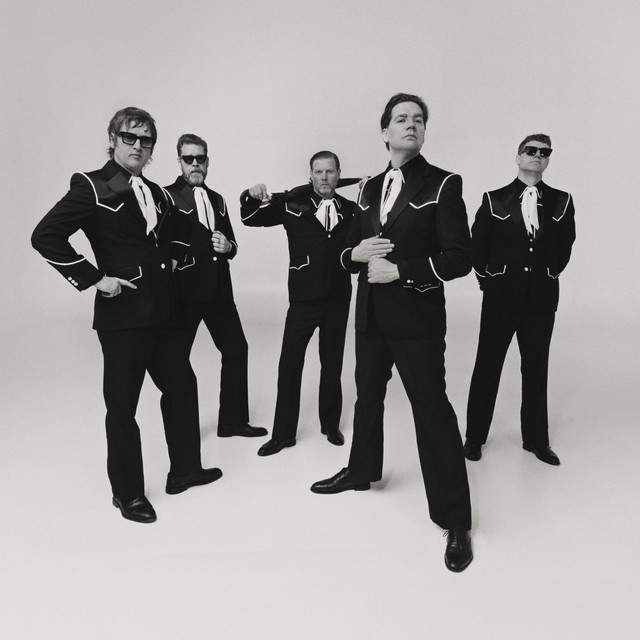
Walking home from the Empty Bottle at 1 a.m., ears still ringing from a Teen Mortgage set, I realized the entire room had been locked at the same tempo for forty minutes straight. Not a ballad, not a breakdown, not a single moment where the band offered you a chance to catch your breath. The Hives did the same thing on The Death of Randy Fitzsimmons in 2023—twenty years after everyone declared garage rock dead, they came back with an album that refuses tempo variance like it's a luxury they decided not to afford. That's the condition this playlist diagnoses: garage rock stripped to its skeleton, BPM locked between 155 and 175, egg punk's 2020s revival running the exact same argument The Hives made in 2000. The moment you agreed to slow down is the moment you lost.
The standard deviation here is 8.7 BPM. On paper, that reads as monotony. On a run, it's something else—it's the body's maximum sustainable output with the governor removed. Spiritual Cramp, Teen Mortgage, Thee Oh Sees, The Hives: zero shared infrastructure, no common producer, no overlapping geography. Spiritual Cramp recorded in Los Angeles. The Hives in Fagersta, Sweden, a town of 12,000 people. Teen Mortgage somewhere in the Pacific Northwest noise-rock continuum. What they share is the choice to make tempo the only constant, so the only variable left is how long you're willing to hold it.
"Rigor Mortis Radio" hits at track two and establishes the rule: this will not modulate. Randy Fitzsimmons—the Hives' fictional sixth member, their Bourbaki, the collaborative pseudonym they've maintained since 1993—gets credit on every track The Hives touch. The myth has always been part of the function. By the time "Bogus Operandi" and "Two Kinds Of Trouble" cycle through, you're not listening to a playlist. You're running the Hives' actual argument, the one they've been making since Veni Vidi Vicious on Burning Heart Records in 2000: refuse the upgrade cycle, stay at the speed the body can maintain indefinitely, see who blinks first.
The wall breaker is "1000 Answers" at track fifteen, and it works because it arrives the moment you've accepted the terms. Pelle Almqvist's vocal on that track doesn't offer resolution—it offers a thousand answers and none of them are the right one. That's garage rock's core competency: it knows the question is whether you keep moving, and it knows the answer doesn't matter as much as whether you're still running when the song ends.
From the coach
Lock into 165 and hold it
First two tracks are not your tempo yet. Let heart rate climb naturally. Do not chase the 169 BPM out of the gate. You need three minutes to settle before you commit to the lock.
Track 5 forward: the BPM flattens to 164–165 and stays there. This is a threshold hold, not an interval set. RPE around 7. The playlist will not offer you a recovery window. Do not manufacture one. Your job is to prove you can hold the same output when the only variable is time.
At 31 minutes — "1000 Answers" — you hit the wall breaker zone. This is cognitive fatigue, not muscular. Heart rate is stable. Breathing is steady. Your brain is bored and will suggest slowing down. Do not negotiate. Use the snare as your metronome. Let the tempo make the decision for you.
Final five tracks: no resolution, no cooldown. The BPM holds at 165. You finish still moving. Walk it off after the playlist ends.
FAQ
- How do I pace a run to this playlist?
- Start with The 2023 Convergence and let Spiritual Cramp, The Hives, and Teen Mortgage set the rule: this won't modulate. By the time you hit the 165 BPM Lock (tracks four through six), you're committed. The Randy Fitzsimmons Doctrine in the middle keeps you honest, and The Wall Breaker Zone at track fifteen is where you decide if you're holding the tempo or negotiating an exit. The Finish With No Resolution gives you five tracks to close it out—still moving, no relief, exactly as intended.
- What type of run is this playlist built for?
- Tempo runs, threshold efforts, or any workout where you're testing how long you can hold a pace that's just past comfortable. This isn't a long slow distance playlist—it's 47 minutes of sustained output with no modulation. If you're running intervals, the playlist won't help you; it doesn't believe in rest. If you're running a 10K at race effort or doing a hard 5-mile tempo, this is the argument you need.
- How does the BPM match my running cadence?
- Average BPM sits around 165 with a standard deviation of 8.7, which means the playlist locks into a narrow tempo band and stays there. That's faster than most runners' natural cadence but perfect for tempo work where you're pushing 170-180 steps per minute. The lack of variance is the point—it removes tempo as a variable and makes endurance the only question. You're not matching the music; you're holding the line the music establishes.
- What's the key moment in this playlist?
- Track fifteen: The Hives' '1000 Answers.' It hits at the two-thirds mark when your body is asking whether you agreed to keep holding this pace. Pelle Almqvist sings like a man with a thousand answers to a question he's not going to clarify, and the tempo stays locked. It's not a climax—it's confirmation. The playlist isn't testing whether you can go faster. It's testing whether you'll agree to slow down. '1000 Answers' is where you realize the answer is no.
- Why is The Hives all over this playlist?
- Because The Hives spent twenty years being told their moment had passed, then released The Death of Randy Fitzsimmons in 2023 with the same argument they made in 2000: refuse the upgrade cycle, lock the tempo, see who blinks. Seven Hives tracks anchor this playlist not because they're filler but because they're the thesis. Fagersta, Sweden. Population 12,000. Burning Heart Records, then Disques Hives. They never modulated, and this playlist runs their doctrine all the way through.
- What makes egg punk good for running?
- Egg punk is garage rock with the romanticism removed—short songs, locked tempo, no room for dynamics. Spiritual Cramp and Teen Mortgage show up here because they made the same choice The Hives made in 2000: strip it to the skeleton, remove tempo variance, make endurance the only variable. It's not about being fast. It's about refusing to slow down. That's a running philosophy, not just a genre tag.