White Reaper came out of Louisville in the early 2010s playing what they called "garage-butt"—a jokey descriptor that undersold how seriously they studied the Wipers, the Nerves, and every Nuggets compilation ever pressed. By the time they signed with Polyvinyl, they'd figured out something crucial: you can worship at the altar of Greg Sage and still write hooks big enough to rattle around a basketball arena.\n\nTheir self-titled 2015 album—recorded with the band handling production themselves—hit that sweet spot where power pop meets skate-punk without tipping into either genre's worst tendencies. "She Wants To" clocks in at 155 BPM with 90% energy, which in practical terms means it feels like getting shoved down a hill in the best possible way. The guitars are fuzzed out but not sludgy, the drums hit hard but stay nimble, and the whole thing wraps up before you've burned through a mile.\n\nBy 2021's Asking For A Ride, they'd worked with producer Kevin Ratterman (My Morning Jacket, Young Widows) and expanded the sonic palette without losing the velocity. "Fog Machine" pushes to 165 BPM—fast enough to pull you through a tempo run when your brain starts negotiating for a walk break. The production's cleaner than their early work, but the urgency is intact. It's the sound of a band that figured out how to grow up without slowing down.\n\nTheir recent split with Spiritual Cramp—a Bay Area outfit on Flatspot Records who share their devotion to caffeinated three-minute burners—shows they're still chasing that energy even as the broader garage-rock revival fragments into a thousand micro-genres. "Shimmy" sits right in the middle at 160 BPM, featuring Spiritual Cramp in a way that feels more like a relay race than a duet. The track's got that same twitchy momentum as early Marked Men records, all forward motion and no wasted space.\n\nRunning to White Reaper makes sense because their music operates on the same principle as a good interval workout: get in, hit it hard, get out. These aren't songs designed for contemplation or gradual builds. They're front-loaded with energy and structured to maintain it, which mirrors how your body feels at mile two of a hard five-mile effort when everything's firing and nothing hurts yet. The Lakefront Trail at dawn with "Fog Machine" blasting is about as close as I get to religious experience.
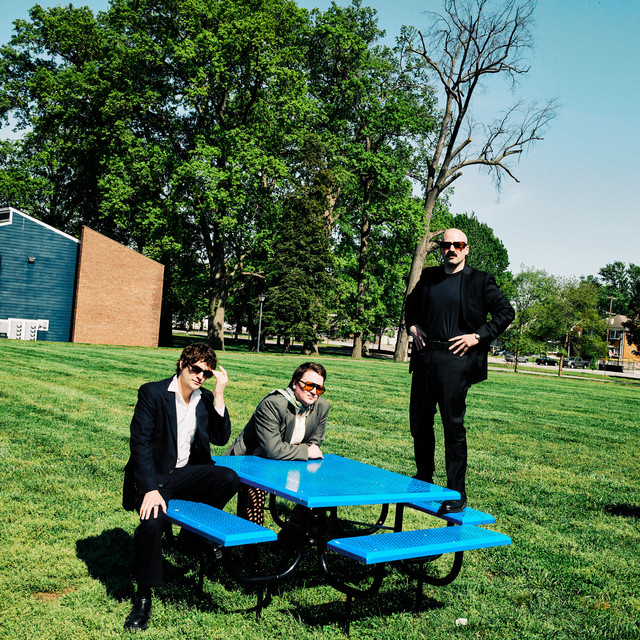
White Reaper
White Reaper's tracks average 160 BPM — see more 160 BPM songs for tempo runs.
FAQ
What's the best White Reaper album for running?
The self-titled 2015 album is relentless—ten tracks, zero filler, all of it hovering around 150-160 BPM. It's raw, self-produced, and designed for maximum momentum. Asking For A Ride works if you want cleaner production but the same urgency. Honestly, both work better as full-album listens than as isolated tracks because the sequencing maintains that garage-rock tunnel vision.
How fast should I run to White Reaper?
Their tracks cluster between 155-165 BPM, which translates to roughly 77-82 strides per minute if you're hitting every other beat. That's tempo-run or fast interval pace for most runners—not your easy Sunday long run. I use them for mile repeats or when I need to negative-split the back half of a workout and my brain's trying to bail.
Are White Reaper similar to any other running-friendly bands?
If you're into White Reaper's velocity, check out Spiritual Cramp, the Marked Men, Radioactivity, or early Exploding Hearts. They all operate in that same garage-punk sweet spot where power pop hooks meet skate-punk tempos. Protomartyr's another Louisville connection, though they're moodier and more post-punk. For pure running utility, Spiritual Cramp's the closest match—same BPM range, same refusal to waste time.
Why does White Reaper work better for short runs than long runs?
Their songs are structurally simple and emotionally direct—which is a feature, not a bug, but it means the palette doesn't shift much over time. Three or four tracks in a row feels like pure propulsion. Fifteen tracks deep and you might crave dynamic range. I use them for workouts under eight miles or when I need a quick blast of speed in the middle of a longer effort.